The Two Pieces of Data That Matter Together
Two facts that look unrelated at first read are actually the same setup viewed from two angles.
Fact one: The largest perpetual traders on Hyperliquid — the cohort that typically runs positions north of $10 million — flipped from net short to net long in early March per Glassnode, and have stayed long ever since. The size of that long bias has grown through April. The current reading is the most aggressively net-long this dataset has ever shown.
Fact two: Funding rates on bitcoin perpetuals across major exchanges sit at −0.13% on a seven-day basis per Coinglass, and have been negative for roughly 47 consecutive days — one of the longest bearish-derivatives stretches on record.
Read those facts in isolation and they sound contradictory: whales are long, but the rest of the derivatives market is short. Read them together and they are the same trade — one cohort positioning correctly and getting paid to hold while everyone else fights the move.
Why Hyperliquid Whale Flow Matters
Hyperliquid has become, over the past year, the on-chain venue of choice for traders running concentrated size. That changes the interpretive weight of its positioning data. A sustained long bias from this cohort tends to lead spot bitcoin price action by days to weeks rather than follow it.
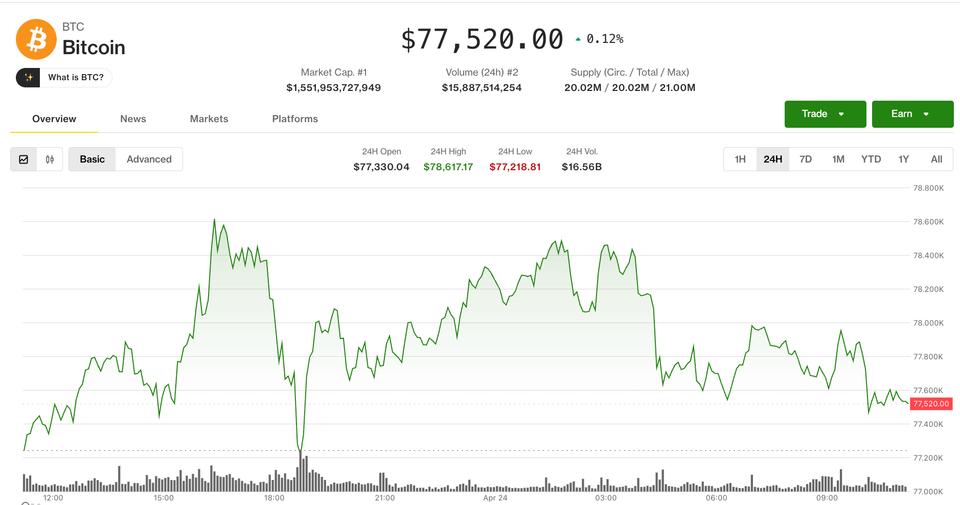
The receipt is on the chart. The early-March flip to net long preceded BTC’s recovery from the mid-$60,000s. As bitcoin ground higher into April and brushed near $80,000 earlier this week, the whale position didn’t unwind — it deepened. That is the opposite of what you’d expect if the cohort were just chasing strength. They were positioned before the move, and they have been adding into it.
The Funding Side Is Doing the Real Work
Negative funding for 47 days is not a minor detail. At −0.13% on a 7-day basis, shorts are paying longs to keep their positions open — and they have been paying for nearly seven straight weeks. That is a structural transfer of capital from one side of the order book to the other.
For the Hyperliquid whales, the implication is precise: they are being paid to wait. Their long thesis doesn’t need to be right immediately. It needs to be right eventually — and the carry on the position turns positive while everyone else’s short thesis bleeds time premium.
For the short side, the math is the inverse. Every day funding stays negative is a day the cost basis of those shorts moves against them. At some point, that cost compresses into a forced cover.
The Macro Tailwinds Just Lined Up
The technical setup got reinforced by a clean macro backdrop into the weekend:
- S&P 500 closed at a record high on Friday, capping its longest weekly advance since 2024
- Treasury yields dropped as the DOJ closed its probe into Fed Chair Jerome Powell, potentially clearing the path for Kevin Warsh’s confirmation as the next Fed leader
- Oil eased with the broader risk-on tone
That is not a backdrop where shorts get to retreat in good order. Equities printing records, yields softening, and risk appetite resuming is the environment where the next macro-driven move higher in BTC has the highest probability of triggering a forced unwind in the negative-funding crowd.
The geopolitical wildcard is still there — Trump canceled his delegation’s Pakistan trip after Iran’s foreign minister left the country before the U.S. group even set off — but the rest of the macro tape is doing the structural work for the bullish setup.
What Could Go Wrong With This
Two failure modes worth respecting:
- The Iran de-escalation can reverse. Trump’s canceled delegation is a setback, not a deal-killer, but a hard escalation in the Strait of Hormuz puts Brent back above $100 and forces a risk-off bid that the whale longs would have to defend through.
- The squeeze trigger can fail at $80,000. The same level that whales positioned for is the same level the short-term holder cohort uses to break even and exit. A push to $80K that gets absorbed by short-term holder distribution — not by short covers — is a fade signal, not a continuation. Watch funding: if the rate flips positive on the approach, the squeeze is mechanical; if it stays negative through a $80K test, the move is being sold by spot, not by panicked shorts.
What This Means for Traders
A few operational reads:
- The whale long positioning is a probabilistic edge, not a guarantee. Hyperliquid leads spot by days-to-weeks; that’s a base rate, not a certainty for this specific instance. Size accordingly.
- Funding is the cleaner trigger than price. A break above $80K with funding still negative is the asymmetric trade — the squeeze mechanic kicks in mechanically. A break above $80K with funding already flipped positive means the easy money is already priced; the trade is more complicated from there.
- The pair trade still beats the directional bet. If you believe the whale-long thesis, expressing it as long BTC vs. short the alt complex keeps the positioning narrow — same reason the alt fade has been telling on the way up. The dispersion between BTC and everything else is information; respect it.
- Carry matters when you’re early. Negative funding means even a long thesis that takes another 2-4 weeks to play out is paid to wait. Sizing decisions that account for the carry — rather than just the price target — is how the Hyperliquid whales have built into the largest long they’ve shown in the dataset without burning capital.
The compact framing: the smartest concentrated capital on a key on-chain venue has been long for two months, and the rest of the derivatives market has been paying them to be right. That is the kind of asymmetric setup that produces sharp, fast moves once the catalyst lands — and it costs the patient side almost nothing to wait for it.