Wall Street Buys When Wall Street Is Quiet — That Note Just Stopped Being Quiet
Goldman Sachs carries $2.36 billion in crypto ETF positions. That alone is worth keeping in mind while reading anything the bank publishes about bitcoin. When its analyst James Yaro released a note this week suggesting bitcoin and crypto-related equities may have reached their cycle bottom following months of steady decline, it wasn’t a theoretical view — it was a view issued by an institution with material skin in the game.
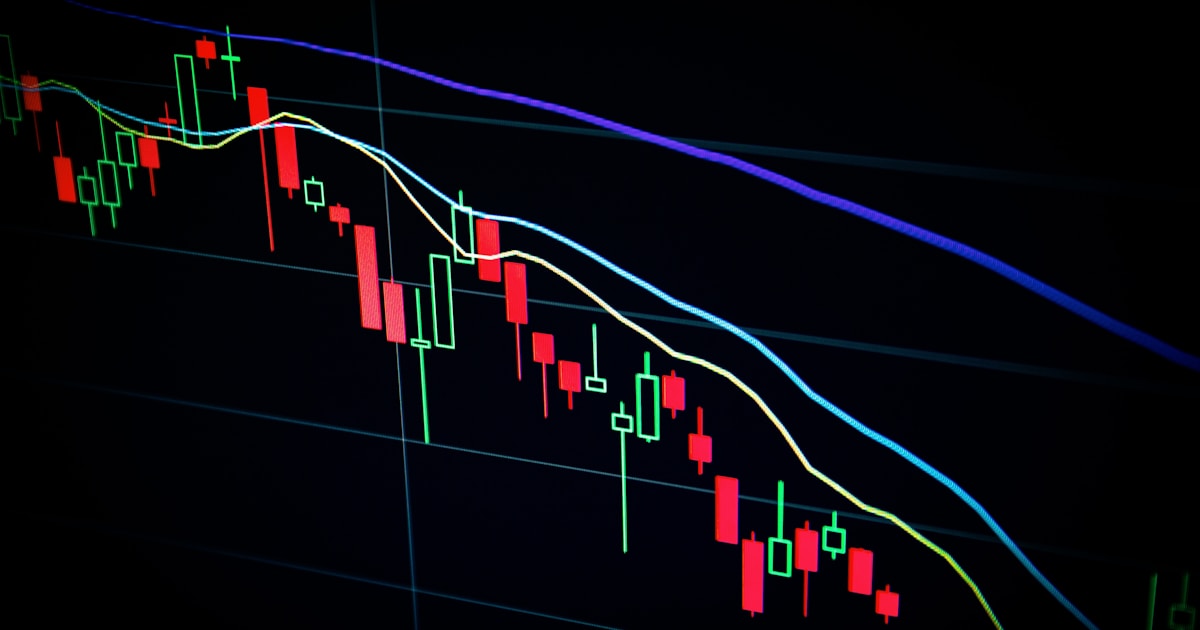
The crypto stock complex has shed 46% since peaking in October 2025. Yaro’s framing of recent weeks is precise: “volatile but flattish performance.” That pattern historically precedes accumulation phases rather than further breakdown.
The Three Buy Calls That Came With the Note
Goldman didn’t just offer a directional view. The note put specific names behind it — all three carrying Goldman’s “Buy” rating:
- Coinbase — Pivoting aggressively into crypto derivatives, subscriptions, equities trading, and banking
- Robinhood — Expanding into advanced trading tools and financial services
- Figure Technologies — Blockchain-based HELOC business; price target raised to $42 (from $39), implying 35% upside
A public Buy list from an institution already holding billions in crypto ETF exposure is a clearer signal of directional conviction than almost any market commentary. It suggests money may begin rotating back into crypto-adjacent equities.
What Makes the Call Stronger Is That It Isn’t Alone
If Goldman’s note sat in isolation, it would be one datapoint. It doesn’t. Multiple independent research firms are arriving at the same conclusion through different analytical lenses:
K33 Research flags that ETF distribution has slowed significantly since late February, with supply held for more than six months now rising — a structural sign of market stability rather than panic selling.
Bernstein is more direct. The firm asserts bitcoin has definitively bottomed and maintains a $150,000 year-end price target. Their evidence stack:
- Strong and recovering ETF inflows
- Growing corporate treasury demand (Strategy/MSTR now holds $53.5 billion in BTC)
- Negative funding rates in perpetual swaps — historically a contrarian bullish signal
- Low open interest, suggesting leverage has been washed out
The convergence of signals across flow analysis, on-chain distribution data, corporate treasury behavior, and derivatives positioning is what makes the bottom thesis harder to dismiss than a single-shop call.
Reading the Selloff for What It Actually Was
The pullback from roughly $75,000 to $67,000 hurt. It was not, however, structural. Analysts across desks are framing it as a sentiment reset rather than a fundamental breakdown. The macro backdrop — rising oil prices, geopolitical tensions, a hawkish Fed — generated headwinds that temporarily swamped crypto-specific tailwinds.
Watch what bitcoin actually did during the pain. Range-bound trading between $60,000 and $75,000. Selling pressure that eased rather than accelerated. Long-term holders who stayed put. None of those are the signatures of a market in structural decline. All of them are the signatures of accumulation.
The Caveat Goldman Is Willing to Name
The bank’s posture isn’t unhedged. Goldman acknowledges that trading volumes could dip further, potentially cutting 2026 revenue by 2% and profits by 4% for the companies it’s covering. Their base case, though, expects volumes to rebound within a median three-month trough period — which would put the recovery clock already ticking.
That caveat is useful. It means the Buy rating isn’t contingent on everything going right immediately. It’s contingent on the floor holding and trough-length normalizing — both conditions the current data is consistent with.
What Traders Should Actually Do With This
The question isn’t whether Goldman Sachs is always right. They aren’t. The question is whether a convergence of signals — slowing ETF distribution, stabilizing price action, institutional Buy ratings, and strong corporate treasury demand — creates a probability-weighted case for positioning ahead of recovery.
For medium- and long-term investors, the current environment is being described by multiple Wall Street desks as one of the most attractive entry points since the post-FTX lows in late 2022. Whether or not a reader agrees with that framing, the fact that Goldman Sachs is publicly calling a bottom — while holding $2.36 billion in crypto ETF positions — is a datapoint that deserves serious weight in any trader’s framework.
The ATHENA Read
When institutional capital publishes a bottom call, the correct response isn’t to trust the call — it’s to interrogate the signals behind it. Do that here and what’s visible is exactly the kind of confluence (flow data plus positioning data plus sentiment data) that has historically marked durable turns. Position sizing and timing are still the trader’s job. But the backdrop has shifted meaningfully, and the cost of ignoring that shift is asymmetric against traders waiting for the all-clear that never technically arrives.
Data sourced from Bitcoin Magazine reporting on Goldman Sachs analyst note, K33 Research, and Bernstein research, March 2026.